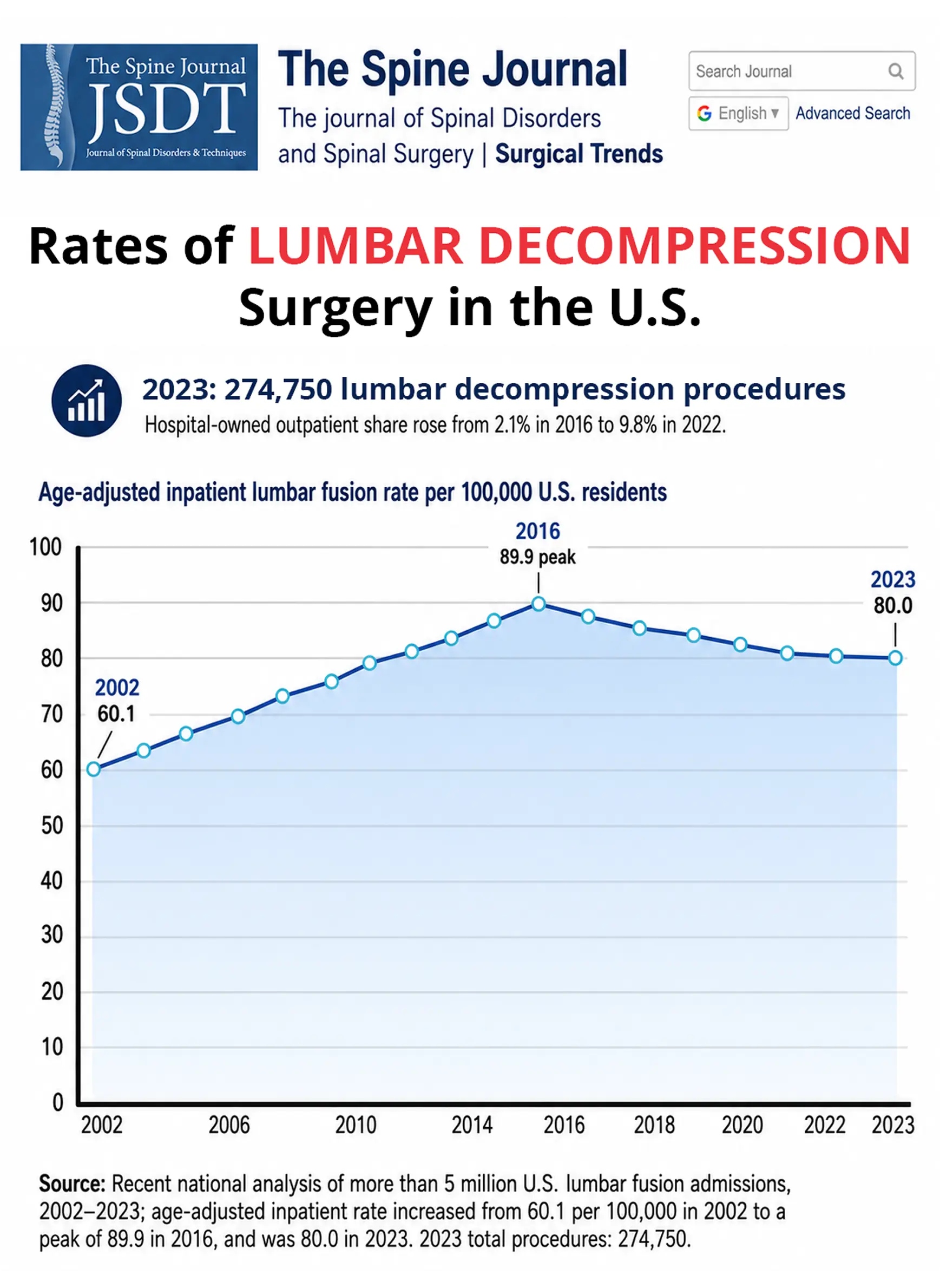
Drug-free, surgery-free - no epidurals, no $80,000 decompression, no 6-month recovery
Our country is performing more and more unnecessary decompression surgeries every year...
But before we talk about what the system doesn't want you to know - let's talk about what stenosis has actually taken from you.
The version of you who walked into a store without checking where the benches were. Who didn't need the cart to lean on. Who got through a supermarket, an airport, a whole church service, without stopping to wait for the burning in your legs to fade.
Stenosis took that person. And the medical system's answer has been to manage the waiting, not stop it.
Here's what the system doesn't want you to know:
The cost of surgical hardware for a lumbar decompression? A few hundred dollars. The average price you're charged?
$25,000 – $80,000.
These surgeries take 1–3 hours to perform, and the hospital pockets tens of thousands. Is it any wonder why surgery recommendations keep climbing?
But here's the real problem:
Around 1 in 7 decompression patients end up back in the operating room. And here's what almost nobody is told: your MRI was taken lying down. Your symptoms happen standing up. In loaded imaging designed to simulate standing, around two thirds of patients show significantly less canal space than their standard scan showed. Some cross from mild to severe the moment weight goes through the spine.
So a scan calling your stenosis "not that bad" wasn't evidence nothing was wrong...
...it was evidence the test was taken in the one position that hides it.